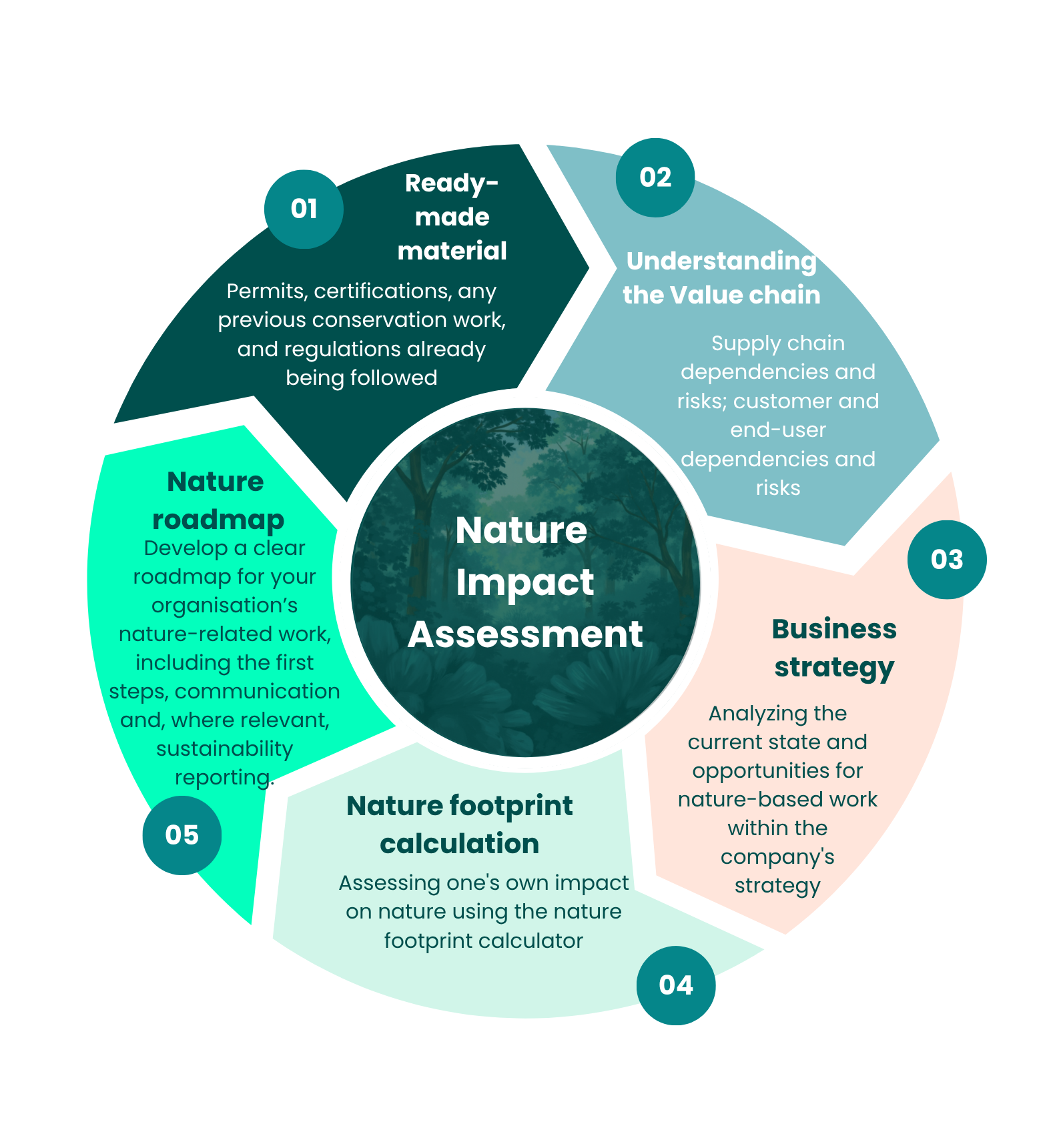

See your business through nature’s lens – identify nature-related impacts
Understanding nature-related impacts should be on every organisation’s agenda. Healthy ecosystems and biodiversity are fundamental to resilient and sustainable business. At the same time, evolving regulation increasingly requires organisations to identify nature-related impacts as part of their risk management and investment decision-making.
We help organisations understand what nature-related work and impact assessments involve, and what they mean in the context of their own operations. Understanding your nature-related impacts is also the key to identifying new business opportunities and creating long-term value.
Why identify your organization’s nature-related impacts?

Strenghten risk management: Nature-related risks are closely linked to climate risks, and both are becoming an integral part of enterprise risk management. Understanding your nature-related impacts is the foundation for identifying and managing these risks.
Prepare for evolving regulation. Regulatory requirements related to nature and biodiversity are increasing, and organizations are expected to better understand, manage and, where required, compensate for their impacts on nature.
Support informed decision-making. Measuring your organization’s nature footprint provides valuable data to guide strategic decisions and prioritise actions.
Meet stakeholder expectations. Employees, customers and investors increasingly expect organizations to take responsibility for their impacts on nature. Understanding and addressing nature-related impacts is becoming a core element of corporate sustainability.
How to get started with nature-related work?
Book a free consultation to discuss where your organization stands in its nature journey and identify the next steps!
Training: Identify your oganization’s nature-related impacts
Nature is essential to both business and society. As regulatory requirements and stakeholder expectations evolve, organizations need to understand how their operations depend on and impact nature.
In this training, you’ll learn how to identify and assess your organization’s nature-related impacts, understand the risks associated with biodiversity loss, and take the first steps towards reducing those impacts. You’ll also discover how nature-related and climate-related risks are connected and why both are an integral part of effective risk management.
Who should identify their nature-related impacts?
- Depends directly on natural resources but lacks a clear understanding of its overall nature-related impacts and dependencies.
- Recognises that its operations have significant impacts on nature and needs reliable data to manage and reduce those impacts.
- Wants to identify and better manage nature-related risks as part of its business and risk management strategy.
- Is unsure how to get started with nature-related work and needs practical guidance.
- Plans to offset or compensate for impacts through biodiversity or nature markets and requires an introduction before entering regulatory or approval processes.
- Wants to prepare for evolving regulation related to biodiversity and nature-related reporting.